International Economics Olympiad
An independent, student-first guide to the IEO — the three rounds, the syllabus, and the pathway from your regional round in Greater China to the global finals.
 Photo: IEO
What is the International Economics Olympiad?
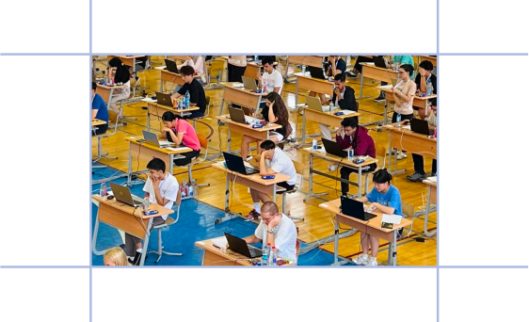
The IEO is an annual competition for high-school students around the world in economics and finance. It is built to reward creative problem-solving rather than rote learning, and it runs three complementary rounds — a Finance & Economics multiple-choice test, a set of open questions, and a team business case argued in English before a panel of judges.
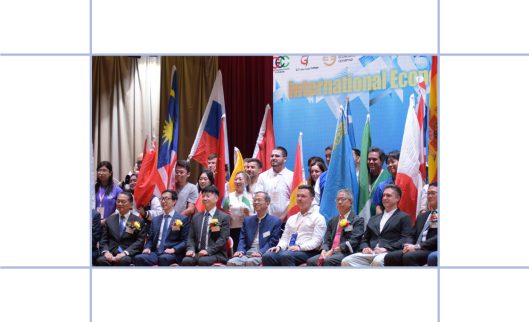
Contestants are under 20, competing in national teams of up to five with one or two team leaders. Participation in the official Olympiad is free of charge, and the competition is supported by Eric Maskin, winner of the 2007 Nobel Memorial Prize in Economic Sciences.
This is an independent guide and is not affiliated with, endorsed by, or the official site of the International Economics Olympiad Association (ieo-official.org). “International Economics Olympiad” and “IEO” are referenced for identification only.
What the IEO builds
Economic thinking, tested
Real micro, macro, international economics and finance — reasoned the way top universities expect, not memorised.
Teamwork under pressure: a five-student squad, a live business case, one panel of judges.
A record that travels
A globally recognised olympiad — a strong signal for economics, PPE and finance applications abroad.
Measure yourself against an international field — 74 countries have competed since 2018 — on a genuinely global stage.
Parts of the competition
Finance & Economics MCQ
Forty multiple-choice questions across different aspects of economics and finance, against the clock.
Read moreFinance & Economics OQ
Five open questions, of which four are graded — you choose which to answer in depth.
Read moreBusiness Case
A team presentation of case solutions before a panel of judges, delivered in English.
Read moreThe syllabus at a glance
Each round draws on the same core toolkit — demand and supply, market structures, macro policy, trade, and the fundamentals of finance and risk. See the full breakdown and how each part is scored on the competition page.
Competition regions
Students enter through their regional organiser. Chinese Mainland: The IEOC 2027 handbook lists an online Preliminary Round in December 2026, an Annual Summit in East China in spring 2027, and international opportunities in summer 2027. Exact dates, current entry deadlines and fees require the latest organiser notice. Hong Kong, Macau and Chinese Taipei have separate selection notices.
Chinese Mainland
Preliminary + national rounds · the largest delegation.
Hong Kong SAR
Its own regional round & team selection.
Macau SAR
Its own regional round & team selection.
Chinese Taipei
Its own regional round & team selection.
Guides & competition updates
-
IEO Past Papers: Select Practice by Round Skill, Not by Year
Practising IEO past papers in year order often fails to build specific round skills. Learn how to classify questions by MCQ recall, Open Question reasoning, or Business Case defence to create balanced practice sets.
-
IEO Syllabus by Round: What the MCQ, Open Questions and Business Case Each Demand
A flat IEO syllabus list is not a study plan. This guide maps broad economics topics to the specific demands of MCQ recall, Open Question writing, and Business Case strategy, helping students prepare format-aware responses rather than generic definitions.
-
IEO Business Case Presentations: Defend the Assumption That Matters Most
In IEO business case presentations, judges reward the defense of critical assumptions over polished slides. Learn to identify and stress-test the single assumption that determines your model’s validity.