Preparing for the International Economics Olympiad (IEO) requires more than just memorizing definitions. While students often search for ieo past papers to simulate exam conditions, the reality is that comprehensive, publicly downloadable archives of every previous year’s full test are not always readily available in a single repository. However, this does not mean you cannot build high-quality practice. By leveraging the official syllabus, sample questions, and structured mock days, you can create a rigorous preparation routine that mirrors the actual competition.
Understanding the IEO Structure
The IEO typically follows a multi-stage format. For many regions, including the China route, the progression involves a preliminary stage, followed by a national round (often referred to as the China station), and finally the global finals. The national round usually occurs around March, while the global station takes place between April and July. Understanding this timeline helps you pace your study. Instead of waiting for a specific set of ieo past papers, focus on mastering the core competencies tested at each stage.
The competition generally covers Microeconomics, Macroeconomics, Finance, and Business Case studies. Each section has distinct demands. For instance, the business case might ask you to analyze unit economics or break-even points, while macro questions could involve calculating GDP changes based on fiscal policy shifts. Knowing these patterns allows you to generate relevant practice problems even without the exact historical test sheets.
Building Your Own Mock Exams
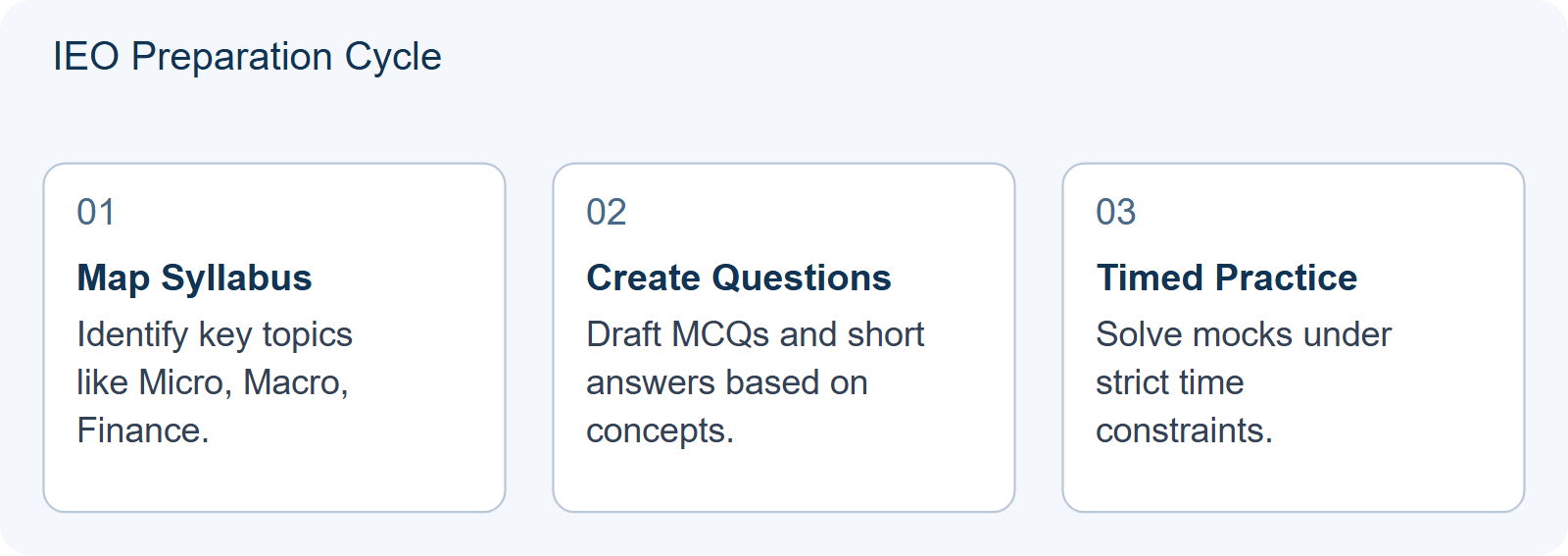
A practical approach is to construct your own mock exams using the official syllabus as a blueprint. Start by selecting one topic from each major area—say, Supply and Demand from Micro, Fiscal Policy from Macro, and Bond Pricing from Finance. Write three multiple-choice questions and two short-answer questions for each. This mimics the variety found in actual competitions.
For example, consider a macroeconomic scenario: “If the government increases spending by $20 million and raises taxes by 3%, how does this affect GDP given an MPC of 0.8?” This type of question tests your ability to apply multipliers and understand crowding-out effects, skills directly assessed in the IEO. You can find similar logic in sample questions released by organizers or educational partners.
| Component | Practice Focus | Suggested Activity |
|---|---|---|
| Microeconomics | Graphical Analysis | Draw demand/supply shifts for external shocks. |
| Macroeconomics | Policy Impact | Calculate GDP changes from fiscal/monetary actions. |
| Finance | Valuation & Risk | Analyze bond prices vs. interest rate changes. |
| Business Case | Data Interpretation | Break down unit economics from a hypothetical firm. |
Leveraging Sample Questions and Syllabus Maps
Official sample questions are invaluable. They reveal the depth of reasoning required. Do not just solve them; analyze why certain distractors are wrong. For instance, if a question asks about opportunity cost, ensure you can distinguish it from sunk costs or marginal utility. This critical reading skill is essential for tackling unfamiliar problems in the real exam.
Additionally, use the detailed syllabus to identify gaps in your knowledge. If the syllabus mentions “Market Failure” and “Externalities,” but you haven’t practiced solving problems involving Pigouvian taxes, create a problem set focused solely on that topic. This targeted practice is often more effective than blindly working through random ieo past papers.
Simulating Exam Conditions
Timing is crucial. The IEO is not just about knowing the answer; it’s about finding it efficiently. Set a timer for each section. For a 200-point exam, allocate time proportionally to the marks. If a section is worth 50 points, give yourself roughly 25% of the total time. Practice under strict time limits to build stamina and reduce anxiety.
You can also join study groups where members share their self-created mock questions. Peer review helps catch errors in question design and exposes you to different problem-solving approaches. This collaborative method builds a robust library of practice material that complements any official samples you have.
Conclusion
While the availability of complete ieo past papers may vary, proactive preparation ensures you are never underprepared. By deconstructing the syllabus, crafting custom questions, and simulating exam conditions, you develop the analytical agility needed to succeed. Remember, the goal is not just to recall facts, but to apply economic reasoning to new situations—a skill that transcends any single test paper.
HYPOTHETICAL/ILLUSTRATIVE: Choosing Between Breadth and Depth in a Self-Designed Mock
When official archives are incomplete, the most critical decision is not just what to practice, but how to structure your self-designed mock exams. Consider a hypothetical student, “Alex,” who has three hours of study time before a national round simulation. Alex faces two plausible choices for constructing a practice set based on the IEO syllabus.
Choice A (Breadth): Alex creates one short question from each of the four core areas: Microeconomics, Macroeconomics, Finance, and Business Case. This ensures coverage across all topics but limits the depth of analysis required for any single problem.
Choice B (Depth): Alex selects only the Business Case component, which often carries significant weight in later stages. They construct a complex scenario involving unit economics, break-even analysis, and sensitivity to interest rate changes, requiring 45 minutes of continuous reasoning per question.
To decide, Alex applies a reusable self-check framework focused on diagnostic value rather than mere completion. The key question is: Which choice reveals more about my current analytical weaknesses?
If Alex’s previous attempts at sample questions showed high accuracy in multiple-choice definitions but low confidence in open-ended data interpretation, Choice B is superior. Breadth (Choice A) might feel productive because it covers many topics, but it risks masking specific gaps in long-form reasoning. In contrast, Depth (Choice B) forces engagement with the multi-step logic typical of IEO case studies. For instance, calculating how a 10% rise in raw material costs affects profit margins requires chaining several economic concepts together, mirroring the cognitive load of the actual exam.
However, if Alex is early in preparation and lacks foundational knowledge in Finance, Choice A becomes necessary. Attempting deep case work without understanding bond pricing or risk assessment leads to frustration rather than learning. Therefore, the decision shifts based on the stage of preparation.
The following table illustrates how to apply this decision matrix:
| Preparation Stage | Recommended Focus | Rationale |
|---|---|---|
| Early Foundation | Breadth (Choice A) | Identifies broad knowledge gaps; builds familiarity with diverse question types. |
| Mid-Level Refinement | Mixed Approach | Two broad topics + one deep case study to balance recall and application. |
| Late Simulation | Depth (Choice B) | Mimics exam stamina; tests integration of concepts under time pressure. |
Alex should also evaluate the quality of their own questions. If a self-created macro question can be solved by memorizing a formula without interpreting context, it fails to simulate IEO conditions. The goal is to create problems where the answer depends on reading comprehension and logical deduction, not just calculation. By choosing Depth when foundations are secure, students transform scarce resources into rigorous training tools, ensuring that every minute spent crafting practice materials directly enhances competitive readiness.
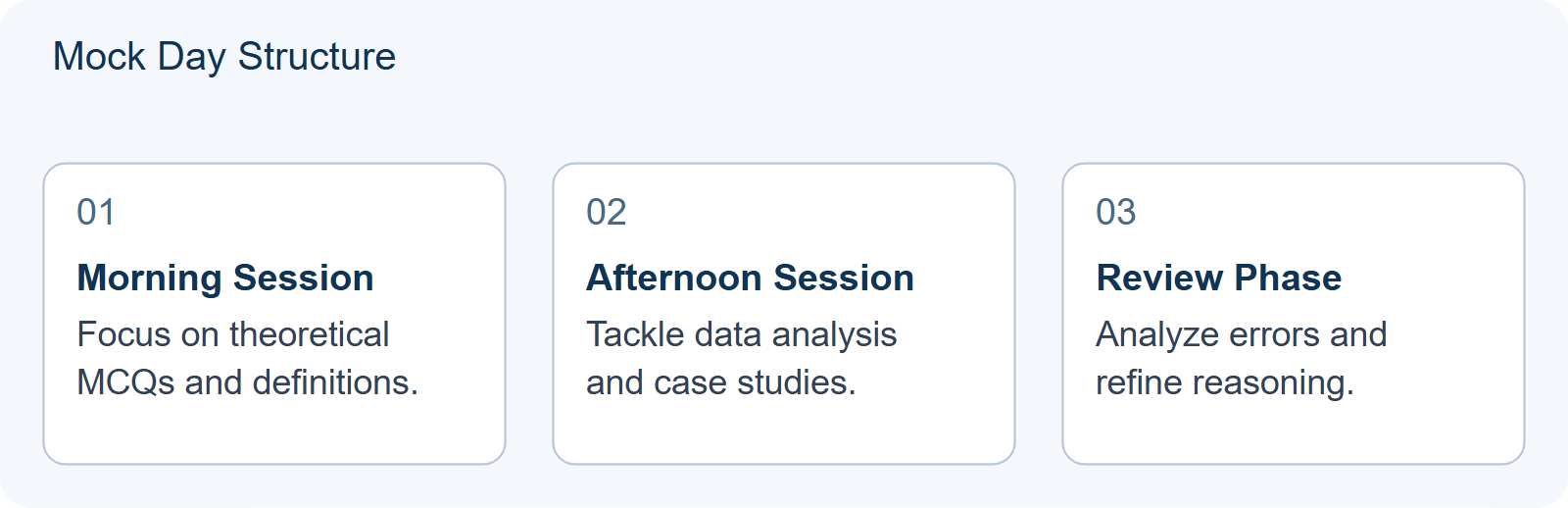
When official IEO past papers are scarce, supplement practice with targeted resources. Review Build Your Own IEO Mock Day to simulate exam conditions effectively. Strengthen core concepts using Reading Economic Data on the IEO and The Maths You Actually Need for the IEO. These guides help bridge gaps in available materials by focusing on recurring question structures and essential calculation skills required for success.
Frequently Asked Questions
Are there official IEO past papers available?
Official sample questions and syllabus guides are typically available. Full archives of every past year may not be publicly centralized, so building custom practice sets is recommended.
How should I prepare for the China station?
Focus on the core syllabus topics such as microeconomic principles, macroeconomic indicators, and financial basics. Practice timed simulations to mimic the national round conditions.
Can I use NEC materials for IEO prep?
Yes, both competitions cover similar foundational economics. NEC sample questions and study guides can provide valuable practice for IEO-style multiple-choice and analytical problems.